
About Coalport
Coalport was founded in 1795 by John Rose at Coalport, Shropshire, near Ironbridge, England. The factory became one of Britain’s leading porcelain manufacturers, producing tableware and decorative porcelain for domestic and export markets.
John Rose had previously worked at the nearby Caughley porcelain works and acquired the business in 1799. This brought additional expertise and production capacity to Coalport. Early wares included blue-and-white transfer-printed designs, alongside other decorated porcelain.
During the 19th century, Coalport developed a reputation for finely decorated porcelain, including richly coloured floral designs, elaborate gilding and styles influenced by French Sèvres and earlier English porcelain factories. The company also became known for its bone china, producing elegant tea services, ornamental pieces and other fine tableware.
Coalport continued manufacturing in Shropshire until financial difficulties led to a change in ownership. Production moved to Stoke-on-Trent in 1926, where the Coalport name and manufacturing traditions continued. In 1967, the company became part of the Wedgwood Group.
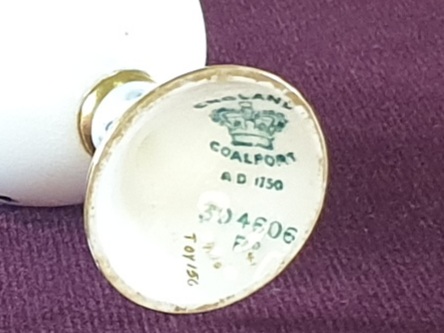
Coalport porcelain encompasses a wide range of styles and periods, from early transfer-printed wares to richly decorated Victorian porcelain and later bone china. Recognisable designs include Indian Tree, while some pieces feature elaborate floral modelling, detailed hand painting and extensive gilding. Backstamps, pattern names, shapes and decorative details can help establish the age and origin of individual pieces.
The Coalport name continued under successive owners, and the brand became part of the wider Wedgwood business. Its long history reflects the development of English porcelain from the late 18th century through to modern production.
Sources
Encyclopaedia Britannica, Coalport Porcelain — The Potteries, Coalport Pottery and Porcelain — The Potteries, Coalport Marks